
What are the clearest signs of needing a whole-house repipe?
The clearest signs of needing a whole-house repipe typically involve recurring issues that point to systemic degradation rather than isolated incidents S1.
Recurring pinhole leaks in different locations of the supply system, especially two or more failures within 12 months, indicate that the pipe material itself is degrading S1. These leaks stem from localized corrosion, often accelerated by water chemistry, chlorine, or stray electrical currents S4. Patching individual leaks addresses the symptom but not the underlying cause, suggesting a broader problem with the piping S4.
Original copper piping in homes built before 1975, having been in service for over 50 years, is often past its documented corrosion window in most water chemistry environments S1. Similarly, polybutylene supply lines, installed between 1978 and 1995, are known to degrade regardless of water chemistry and should be replaced as a category rather than repaired individually S1.
A pattern of plumbing problems, rather than an isolated incident, suggests a need for a broader evaluation of the supply system S2. While a single leak might be a localized issue, repeated repairs in different areas of the home, or multiple sections of piping showing deterioration, can signal that the entire supply system is aging or failing S2. This pattern could include leaks appearing in multiple rooms or plumbing zones, or new water stains emerging after previous leaks were fixed S2. For more on identifying such issues, consider reviewing Signs You Need Repiping S2.
Key Indicators for Repiping
| Indicator | Description | Source |
|---|---|---|
| Recurring Pinhole Leaks | Two or more leaks within 12 months in different locations | S1 |
| Age of Copper Piping | Original copper in homes built before 1975 (over 50 years old) | S1 |
| Polybutylene Supply Lines | Installed between 1978 and 1995, regardless of water chemistry | S1 |
| Pattern of Plumbing Problems | Repeated leaks or repairs in different areas, not just isolated incidents | S2 |
How does water discoloration indicate a repipe is needed?
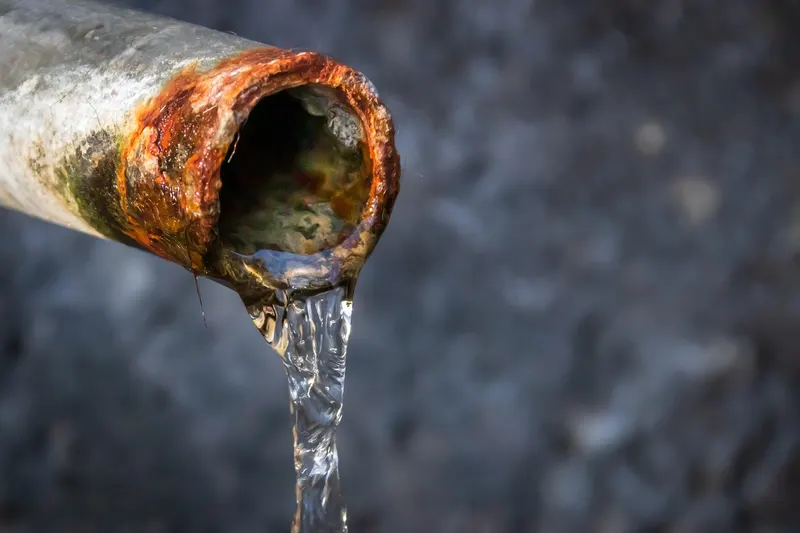
Water discoloration is a clear sign that your home's plumbing may need a repipe, indicating internal corrosion within your pipes S3. When water appears brown, orange, or rusty, it's a direct message from the inside of your pipes S4. This discoloration often means the internal surfaces of the pipes are degrading, releasing rust and other sediments into your water supply S4.
This phenomenon is particularly common with aging galvanized supply lines, where rust and mineral scale accumulate on the pipe walls over decades, a process known as tuberculation S4. This buildup narrows the pipe's opening, and the corroding galvanized steel sheds iron oxide, or rust, into the water S4. You might notice this discoloration most prominently in the morning, especially after water has been stagnant in the pipes overnight S4. While a single plumbing issue might be a localized repair, recurring problems like persistent water discoloration often point to a more widespread deterioration of the supply piping system S2.
When does low water pressure mean I need to repipe?
Low water pressure throughout the entire house often indicates the need for a repipe S4. If you experience low pressure at every faucet and shower, this points to a systemic issue rather than a localized problem like a clogged aerator or a faulty fixture valve S4.
For homes with older galvanized supply lines, a common cause is the gradual narrowing of pipes over decades S4. This occurs due to a process called tuberculation, where rust and mineral scale accumulate on the interior walls of the pipes S4. This buildup reduces the pipe's opening, diminishing the amount of water that can flow through S4.
If the water pressure in your home has decreased slowly and consistently over several years, especially if your home was constructed before 1970, corrosion in galvanized pipes is the most probable reason S4. However, a sudden, widespread drop in water pressure across the house might first suggest a failing pressure-reducing valve, which is a simpler repair S4. This distinction is crucial for determining whether a localized fix or a comprehensive repiping project is necessary S2.
What about visible corrosion and water stains?
Visible corrosion on exposed fittings and unexplained water stains are direct visual cues that your home's plumbing system may be degrading and could require a repipe S4. When you see corrosion on pipes, especially around joints or valves, it indicates that the material is deteriorating, which can lead to leaks and other issues throughout the system S2. This is particularly true for older homes where original copper pipes, installed before 1975, may have been in service for over 50 years, exceeding their typical corrosion window S1.
Water stains that appear without an obvious source, such as a dripping faucet or an overflowing toilet, often point to hidden leaks within walls, ceilings, or floors S2. These stains can be a symptom of widespread piping concerns, suggesting that multiple sections of your supply piping are deteriorating S2. For instance, moisture showing up behind walls, ceilings, cabinets, or trim, or new water stains appearing after previous leaks were supposedly repaired, are strong indicators that the problem is systemic rather than isolated S2. While a single leak might be a localized issue, a pattern of recurring leaks in different areas of the home, or multiple fittings showing deterioration, suggests that the entire supply system warrants a broader evaluation S2.
Does the age of my home's plumbing matter?
Yes, the age of your home's plumbing significantly matters when considering a repipe. Original plumbing in houses built before 1970 is a strong indicator that repiping may be necessary S4. This is particularly true if the home has galvanized supply lines, where rust and mineral scale can build up, narrowing the pipes and reducing water pressure over decades S4.
Copper pipes installed before 1975 have often exceeded their expected lifespan, which is typically 50 years or more, and are prone to corrosion S1, S3. If you've experienced two or more pinhole leaks in different locations within the last few years, it suggests a widespread issue with the copper piping throughout the system S4. These leaks stem from localized corrosion, influenced by water chemistry and chlorine, and patching individual leaks doesn't address the underlying cause S4.
Polybutylene pipes, which were used for supply lines from 1978 to 1995, are known to degrade regardless of water chemistry and should be replaced S1. The degradation of polybutylene pipes is a categorical issue, meaning replacement is warranted for the material itself, not just individual repairs S1. If your home has polybutylene plumbing, a full repipe is generally recommended to avoid future problems.
Ultimately, while a single leak can often be repaired, recurring leaks or widespread deterioration, especially in older plumbing systems, often point to a need for a broader evaluation of your home's entire supply system S2. This kind of pattern suggests that the piping material itself is aging or deteriorating S2.
How many leaks indicate a repipe versus a repair?
Determining whether to repipe or repair depends on the number and pattern of leaks in your home's plumbing system. A single leak, particularly if it occurs under a sink or around a fixture, often indicates a localized issue that can be resolved with a simple repair S2. These isolated incidents do not automatically suggest a broader problem with the entire piping system S2.
However, if two or three leaks appear in different areas of your home, this typically points to a more widespread issue within the piping system S3. Recurring pinhole leaks in various locations, especially two or more failures within a 12-month period, signal that the piping material itself is deteriorating S1. This pattern suggests that the underlying infrastructure is failing, making a whole-house repipe a more cost-effective long-term solution S2. For example, if a leak near a bathroom is repaired, but then months later another leak appears near the kitchen or a different fixture, it indicates that additional parts of the supply piping are aging or deteriorating S2.
Repeated pipe repairs are a strong indicator that a full repipe should be considered S2. If repairs consistently shift from one part of the home to another, or if visible piping shows deterioration in multiple areas, it's advisable to investigate the underlying cause rather than just addressing the latest symptom S2. This is when a comprehensive plumbing evaluation becomes more beneficial than merely fixing the newest leak S2. For homes with copper pipes, two or more pinhole leaks repaired in various places throughout the house over a few years suggest a systemic issue with the pipe's condition S4.