
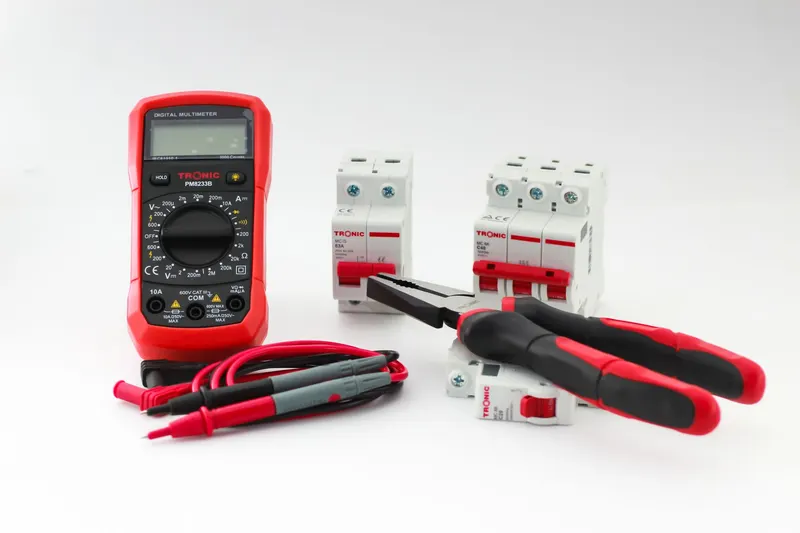
What are GFCI outlets and what do they protect against?
A Ground Fault Circuit Interrupter (GFCI) outlet is designed to safeguard individuals from electric shock S1. It functions by de-energizing a circuit when it detects a current imbalance of 6 milliamperes (mA) or higher, but it will not trip if the imbalance is less than 4 mA S4. This rapid response helps prevent serious injury or electrocution S1.
GFCIs have proven to be highly effective in reducing electrical shock fatalities. In the 25 years following their introduction, accidental electrocutions in the United States were more than halved, even as electricity consumption more than doubled S2. This demonstrates a clear correlation between the increased use of GFCIs and a reduction in electrocutions over the past 45 years S2.
GFCI devices were first incorporated into the National Electrical Code (NEC) in the 1960s S2. Initially, their use was mandated in locations where corded products were likely to be plugged into standard receptacles in wet or damp environments S2. Over time, GFCI requirements have expanded to include a broader range of areas, such as all kitchen and basement areas, regardless of the presence of a water source, and for 240-volt appliances S2. For more details on electrical safety, you might find our article on Signs You Need to Repipe Your House: An Explainer helpful, as it touches on related home infrastructure S2.
While both GFCIs and Arc-Fault Circuit Interrupters (AFCIs) are crucial safety devices, they serve different purposes S1. GFCIs specifically address shock hazards, whereas AFCIs are intended to mitigate fire hazards caused by arcing and sparking in wiring S1.
What are AFCI outlets and what do they protect against?
An AFCI, or Arc Fault Circuit Interrupter, is specifically designed to safeguard against the dangers posed by arc faults S1S4. This device operates by identifying the distinct characteristics of electrical arcing and subsequently de-energizing the circuit to prevent potential fires S4. AFCIs primarily protect property by mitigating fire hazards, which in turn indirectly ensures the safety of individuals S4.
Arcing and sparking conditions within home wiring can lead to fires S1. Unlike AFCIs, standard household fuses and circuit breakers are not equipped to detect or respond to these early stages of arcing and sparking S1. By the time a conventional fuse or circuit breaker would activate to interrupt the circuit, a fire might have already started S1.
AFCIs have been commercially available since approximately 2000 S2. These devices are distinct from Ground Fault Circuit Interrupters (GFCIs), which primarily protect people from electric shock S1S2. While both are crucial safety devices, AFCIs focus on preventing fires, whereas GFCIs address shock hazards S1.
It is important to note that the U.S S1. Consumer Product Safety Commission (CPSC) suggests considering AFCI protection for both new and existing homes S1. Older homes, particularly those with traditional circuit breakers, may especially benefit from the added protection that AFCIs offer against arcing faults that can develop in aging wiring systems S1. If you are considering installing AFCIs, it is recommended to consult with an electrical supply store, an electrician, or the manufacturer of your home's existing circuit breakers S1. Installation should always be performed by a qualified electrician, as it involves working with electrical panel boxes that are typically live, even when the main circuit breakers are off S1.
What is the main difference between GFCI and AFCI protection?
The main difference between GFCI and AFCI protection lies in the specific electrical hazards they are designed to address: AFCIs primarily mitigate fire hazards from arcing faults, while GFCIs protect against shock hazards caused by ground faults S1S2. Both devices are crucial for electrical safety, but they fulfill distinct protective roles within a home's electrical system S1.
Arc-fault circuit interrupters (AFCIs) detect hazardous arcing and sparking conditions in home wiring that typical circuit breakers and fuses might not recognize until a fire has already started S1. These devices respond to unique characteristics of arcing and de-energize the circuit to prevent fires, thereby indirectly protecting people S4. AFCIs have been available on the market since approximately 2000 S2.
Ground-fault circuit interrupters (GFCIs), on the other hand, are designed to protect individuals from electric shock S1. A GFCI trips and de-energizes a circuit if it detects a current imbalance of 6mA or higher, indicating a ground fault S4. GFCIs were introduced into the National Electrical Code (NEC) in the 1960s and have been highly effective in reducing accidental electrocutions in the United States S2.
While both AFCIs and GFCIs are important safety devices, their primary functions differ significantly S1. AFCIs focus on preventing fires, whereas GFCIs focus on preventing electric shocks S1.
Comparison of GFCI vs. AFCI S1
| Feature | AFCI (Arc-Fault Circuit Interrupter) | GFCI (Ground-Fault Circuit Interrupter) |
|---|---|---|
| Primary Function | Addresses fire hazards | Addresses shock hazards |
| Protection Type | Arcing faults | Ground faults |
| Introduction Year | ~2000 | 1960s |
Where are GFCI and AFCI devices typically installed?
GFCI and AFCI devices are typically installed either as circuit breakers that protect an entire circuit or as receptacles that can protect downstream if the load side is connected S4. Both types of devices are crucial for home safety, but they address different electrical hazards S1.
Generally, AFCI devices are installed as circuit breakers to detect issues within the branch circuit wiring, which often includes wiring inside walls S4. AFCIs are designed to prevent fires caused by dangerous arcing and sparking conditions that typical fuses and circuit breakers might not detect in time S1. These devices are particularly effective at protecting property by de-energizing a circuit when an arc fault is recognized S4. The U.S. Consumer Product Safety Commission (CPSC) suggests considering AFCI protection for both new and existing homes, noting that older homes with standard circuit breakers could especially benefit from protection against arcing faults in aging wiring systems S1.
Conversely, GFCIs are typically installed as receptacles because they trip due to problems with connected appliances or tools, rather than issues within the wall wiring S4. GFCIs are specifically designed to protect people from severe electric shock by de-energizing a circuit if a current imbalance of 6mA or higher is detected S1S4. This protection is vital in locations where a corded product might be used near water sources, such as kitchens and bathrooms S2S4. If a GFCI trips, it's usually due to a condition outside the wall, making it more convenient for the user to reset the device directly at the receptacle rather than going to the main electrical panel S4.
While AFCIs address fire hazards and GFCIs address shock hazards, combination AFCI/GFCI devices are available, offering both types of protection in a single unit S1S4. These dual-function devices can be a suitable solution in applications where both types of protection are beneficial S4.
Should you install AFCIs in older homes?
Yes, older homes with standard circuit breakers can particularly benefit from AFCI protection S1. These devices are specifically designed to prevent fires caused by arcing faults, which are electrical problems like arcing and sparking in home wiring S1S4. Such faults occur predominantly in older homes that were built to earlier electrical codes S2.
Unlike ordinary fuses and circuit breakers, AFCIs can detect and respond to early arcing conditions before a fire has a chance to start S1. Without AFCI protection, a fire might already be underway by the time a traditional circuit breaker or fuse opens the circuit S1. While ground-fault circuit interrupters (GFCIs) protect against electric shock hazards, AFCIs focus on addressing fire risks S1.
The U.S. Consumer Product Safety Commission (CPSC) suggests considering AFCI protection for both new and existing homes to enhance fire safety S1. If you are looking to add AFCI protection, you can consult an electrical supply store, an electrician, or the manufacturer of your home's existing circuit breakers S1. It may be possible to replace current components with AFCIs in your electrical panel box S1. It is crucial to have a qualified electrician perform the installation, as this work involves live electrical panel boxes even when main circuit breakers are turned off S1. For more information on electrical safety, you might also want to read our article on Signs You Need to Repipe Your House: An Explainer S1.
Are combination AFCI/GFCI devices available?
Yes, combination AFCI/GFCI devices are available, integrating both types of protection into a single unit S1. These devices provide comprehensive safety by addressing two distinct electrical hazards: arc faults and ground faults S1. AFCIs are specifically designed to mitigate fire risks stemming from electrical arcing and sparking in home wiring, conditions that standard circuit breakers and fuses may not detect in their early stages S1. In contrast, GFCIs are engineered to safeguard individuals from severe electric shock by interrupting the circuit when a ground fault is detected S1S2.
While AFCIs aim to prevent property damage by stopping fires, GFCIs prioritize personal safety against electrocution S4. The U.S. Consumer Product Safety Commission (CPSC) highlights that both devices are crucial for home safety despite their differing functions S1. GFCIs have a proven track record, significantly reducing accidental electrocutions in the United States by over half within 25 years of their introduction, even as electricity usage more than doubled S2. This success is linked to their mandated installation in locations prone to shock hazards, such as wet or damp areas where corded appliances are used S2.
AFCI technology has been available since around 2000 S2. The National Electrical Code (NEC) has required AFCI protection for various 15A or 20A, 120V branch circuits in dwelling units, including kitchens, family rooms, bedrooms, and laundry areas, but not typically in garages or bathrooms S4. GFCI protection is also mandated for 125V through 250V receptacles in numerous dwelling unit locations S4. In some scenarios, a dual-function AFCI/GFCI receptacle can be the optimal solution, offering combined protection at the outlet S4. For installation, it is recommended to have a qualified electrician handle the work, as it involves live electrical panels S1.